
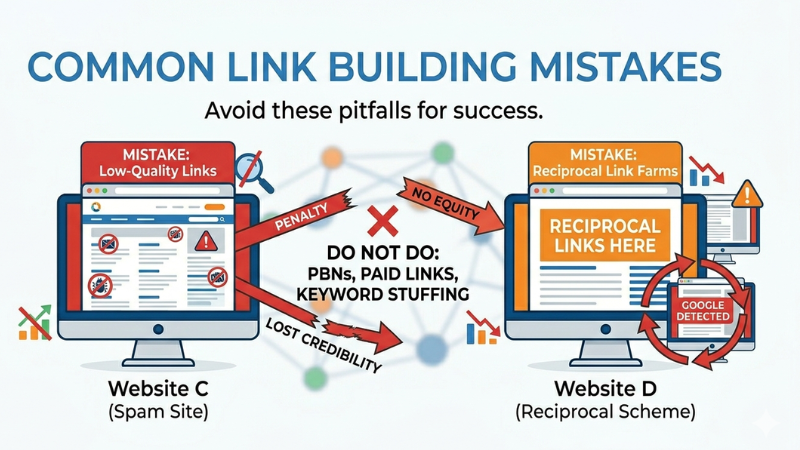
Link building is an important part of SEO that helps websites improve rankings, increase authority, and gain more organic traffic. Search engines use backlinks as signals to understand the trust and relevance of a website.
However, using the wrong link-building strategies can do more harm than good. Spammy backlinks, irrelevant links, and other poor SEO practices can negatively affect rankings and reduce website credibility over time.
In this guide, you’ll learn about the most common link-building mistakes that hurt SEO performance and how to avoid them. You’ll also understand safer and more effective practices that help build a strong and natural backlink profile for long-term SEO success.
Common Link Building Mistakes
Many websites struggle with SEO because they use poor link-building practices. Avoiding these common mistakes can help protect your rankings and build a stronger backlink profile.
Buying Spammy or Low-Quality Links
Cheap backlinks from low-quality or spammy websites can harm your SEO instead of improving it. These links often look unnatural to search engines and may reduce website trust.
Over-Optimizing Anchor Text
Using the same keyword-rich anchor text repeatedly can appear manipulative. Natural and varied anchor text helps maintain a safer and more balanced backlink profile.
Focusing Only on Quantity Over Quality
Many beginners believe more backlinks automatically mean better rankings. In reality, a few high-quality backlinks are usually more valuable than hundreds of weak or irrelevant links.
Getting Links from Irrelevant Websites
Backlinks should come from websites related to your niche or industry. Irrelevant backlinks often provide little SEO value and can make your link profile look unnatural.
Building Links Too Fast
Building too many backlinks in a short period can look suspicious to search engines. A steady and natural link-building approach is safer and more effective for long-term SEO growth.
How These Mistakes Hurt Rankings
Poor link-building practices can seriously affect your website’s SEO performance. Search engines like Google focus heavily on trust, relevance, and backlink quality when ranking websites.
When a website uses spammy or unnatural backlinks, search engines may begin to lose trust in the site. This can reduce the overall authority of the domain and weaken its ability to rank well in search results.
Bad link-building practices can also cause a drop in keyword rankings. Pages that once ranked well may slowly lose visibility because low-quality backlinks send negative signals to search engines.
In some cases, websites may even receive manual penalties from Google for using manipulative link-building techniques. These penalties can significantly reduce organic traffic and make it harder for pages to appear in search results.
That’s why it is important to focus on safe, natural, and high-quality link-building strategies that support long-term SEO growth instead of short-term results.
How to Fix Bad Link Building Practices
Fixing bad link-building practices is important for improving your website’s SEO performance and maintaining long-term search visibility. The first step is to audit your existing backlinks and identify low-quality, spammy, or irrelevant links pointing to your website. SEO tools can help you review your backlink profile and find harmful links.
After identifying problematic backlinks, you can try to remove them by contacting website owners. If removal is not possible, you can use Google’s disavow tool to tell search engines to ignore those harmful links. This helps reduce the negative impact on your rankings.
It is also important to focus on white-hat SEO strategies that follow search engine guidelines. Building natural backlinks from relevant and authoritative websites is much safer and more effective for long-term SEO success. Creating valuable content, earning editorial links, and using ethical outreach methods can help build a strong and trustworthy backlink profile over time.
Best Practices for Safe Link Building
Safe link building focuses on quality, relevance, and long-term SEO growth. One of the most important practices is getting backlinks from high-quality and relevant websites within your industry. These links provide stronger SEO value and help build website authority naturally.
Creating valuable and helpful content is another important strategy. High-quality blog posts, guides, and useful resources are more likely to attract natural backlinks from other websites over time.
It is also important to use diverse backlink strategies instead of relying on only one method. Combining guest posting, niche edits, resource page links, and digital PR can help create a more natural backlink profile.
Maintaining steady backlink growth is equally important. Building too many backlinks too quickly can look unnatural to search engines. A consistent and gradual link-building approach is safer and supports long-term ranking improvements. Focusing on ethical SEO practices helps build trust with search engines and protects your website from penalties.
Final Thoughts
Avoiding common link-building mistakes is important for maintaining strong SEO performance and protecting your website’s rankings. Poor-quality backlinks, spammy practices, and unnatural link-building strategies can harm trust, reduce authority, and negatively affect long-term growth.
That is why focusing on ethical and long-term SEO practices is always the better approach. Building backlinks naturally from relevant and authoritative websites helps create a stronger and safer backlink profile over time.
Safe link-building strategies not only improve rankings but also help build credibility, organic traffic, and online visibility. Instead of looking for shortcuts, focus on quality content, natural outreach, and steady backlink growth. With the right approach, link building can become a powerful long-term strategy for improving your website’s SEO success and overall online presence.
Frequently Asked Questions
How can I identify risky backlinks?
Risky backlinks usually come from low-quality or irrelevant websites with thin content and poor authority. Common warning signs include repeated anchor text, spammy websites, unrelated niches, and websites created only for selling backlinks.
Should old backlinks be removed or disavowed?
If you find toxic or spammy backlinks, you should first try to remove them by contacting the website owner. If removal is not possible, you can use Google’s Disavow Tool to ask search engines to ignore those links.
Can bad backlinks affect rankings?
Yes, bad backlinks can negatively affect your rankings if they appear spammy or manipulative. Search engines use backlinks to measure trust and authority, so too many low-quality links can reduce your website’s credibility and visibility in search results.
How often should backlinks be reviewed?
A backlink audit should be done at least once or twice a year. Regular monitoring helps identify harmful links, maintain backlink quality, and keep your SEO strategy aligned with current search engine guidelines.
What are spammy backlinks?
Spammy backlinks are low-quality links from irrelevant, untrusted, or manipulative websites that provide little SEO value and may harm rankings.Categories