
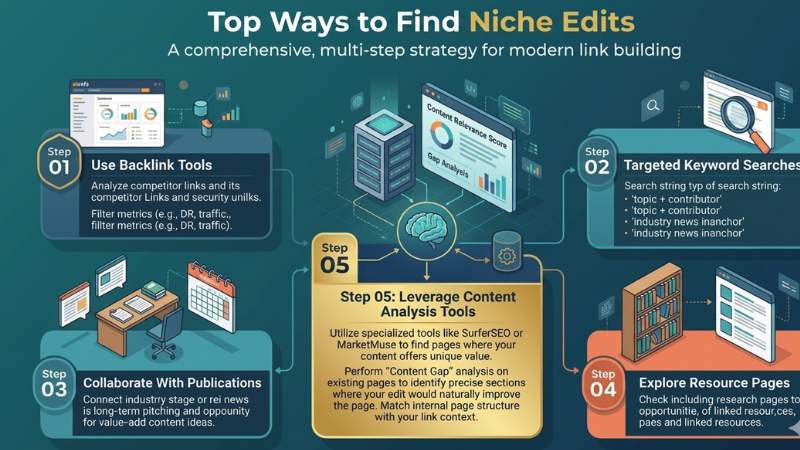
Niche edit backlinks are contextual links added to existing content on relevant websites. They are widely used in SEO because they can help improve rankings, website authority, and organic traffic when placed on high-quality websites.
However, not all backlink websites provide real SEO value. Website quality plays an important role in niche edit link building because backlinks from trusted and relevant websites are more effective and safer for long-term SEO growth.
Using low-quality or spammy websites for niche edits can harm your backlink profile and negatively affect search engine rankings. Poor-quality backlinks may also reduce website trust and create SEO risks over time.
In this guide, you’ll learn how to find high-quality websites for niche edit backlinks, identify spam signals, and choose better backlink opportunities that support safe and effective SEO results.
What Are Niche Edit Backlinks?
Niche edit backlinks are links added to existing content on a relevant website. Instead of publishing a completely new article, the backlink is placed naturally inside an already indexed blog post or webpage. This helps create contextual backlinks that can provide SEO value more quickly.
Niche edits work by finding relevant articles on websites and adding a backlink that fits naturally within the content. Because the page is already indexed and may already have authority and traffic, the backlink can become valuable for SEO.
The main difference between niche edits and guest posts is that guest posting requires creating new content, while niche edits use existing content for link placement.
Niche edits have become popular in modern SEO because they are faster, more contextual, and often placed on aged pages with existing authority. When done correctly, they can help improve rankings, website authority, and organic visibility naturally.
Ways to Identify High-Quality Websites for Niche Edits
Finding the right websites for niche edit backlinks is important for building a strong and safe backlink profile. Below are some key factors to check before choosing a website.
Check Website Relevance
Always choose websites related to your niche or industry. Relevant backlinks provide better SEO value and help search engines understand your website’s topic more clearly.
Analyze Organic Traffic
A high-quality website should have real organic traffic from search engines. Websites with genuine traffic are usually more trustworthy and valuable for SEO.
Review Domain Authority and Trust Signals
Check important SEO metrics like Domain Authority (DA) or Domain Rating (DR). However, authority metrics alone are not enough, so also review trust, consistency, and overall website quality.
Inspect Content Quality
Good websites publish original, useful, and well-written content. Avoid websites with thin, low-quality, or spammy AI-generated articles.
Check Outbound Link Profile
Review the types of websites they link to. Too many outbound links to unrelated or spammy niches can be a warning sign.
Verify Indexing and Website Activity
Make sure the website is indexed in Google and regularly updated with fresh content. Active websites are generally safer for niche edit backlinks.
Avoid PBNs and Spam Networks
Stay away from Private Blog Networks (PBNs) and spam link farms. These websites often use manipulative SEO tactics that can harm rankings instead of improving them.
Why Choosing the Right Website Matters
Lorem ipsum dolor sit amet, consectetur adipiscing elit. Ut elit tellus, luctus nec ullamcorper mattis, pulvinar dapibus leo.
Why Choosing the Right Website Matters
Choosing the right website for niche edit backlinks is important because backlink quality directly affects SEO performance. High-quality backlinks from trusted and relevant websites can help improve rankings, strengthen domain authority, and increase organic visibility over time.
Relevance and trust are two of the most important factors in modern link building. Backlinks from websites related to your industry usually provide stronger SEO value because search engines consider them more natural and useful. Trusted websites also help improve the credibility of your backlink profile.
On the other hand, backlinks from low-quality or spammy websites can harm SEO instead of helping it. Poor backlinks may reduce trust, weaken rankings, and create risks of search engine penalties.
Quality placements provide long-term SEO value because they support natural link building and help create a stronger online presence. That is why focusing on trusted, relevant, and authoritative websites is always a safer and more effective strategy for niche edit backlinks.
Common Mistakes Beginners Make
Many beginners make simple link-building mistakes that reduce the effectiveness of niche edit backlinks. Avoiding these common errors can help build a safer and stronger backlink profile.
Choosing Websites Based Only on DR
Some people focus only on Domain Rating (DR) or Domain Authority (DA) when selecting websites. High metrics alone do not guarantee quality. A website should also have relevance, trust, and real traffic.
Ignoring Traffic Quality
A website may show good SEO metrics but still have little or fake traffic. Real organic traffic is important because it shows the website is active and trusted by search engines.
Buying Cheap Bulk Links
Cheap backlink packages often come from low-quality or spammy websites. These backlinks may harm SEO instead of improving rankings and authority.
Using Over-Optimized Anchor Text
Repeating the same keyword-rich anchor text too often can look unnatural to search engines. A natural mix of branded, generic, and keyword-related anchor text is safer for SEO.
Focusing Only on Quantity
Many beginners believe more backlinks automatically mean better rankings. In reality, a few high-quality and relevant backlinks usually provide more value than a large number of weak links. Quality and relevance are far more important for long-term SEO success.
Tools to Analyze Niche Edit Websites
Using the right SEO tools can help you identify high-quality websites for niche edit backlinks. These tools make it easier to check traffic, authority, backlink quality, and website history before building links.
Ahrefs
Ahrefs is one of the most popular SEO tools for analyzing backlinks and organic traffic. It helps check Domain Rating (DR), referring domains, keyword rankings, and traffic trends for niche edit websites.
SEMrush
SEMrush provides useful data about organic traffic, keyword visibility, backlink profiles, and website authority. It can help identify whether a website has genuine SEO value or suspicious traffic patterns.
Moz
Moz is commonly used to check Domain Authority (DA) and spam scores. It helps beginners quickly evaluate the trust and overall quality of a website.
Google Search Operators
Google search operators can help find indexed pages, guest post opportunities, and niche-related websites. They are useful for manually checking website relevance and activity.
Wayback Machine
Wayback Machine allows you to view a website’s history and previous versions. This helps identify expired domains, ownership changes, or websites previously used for spam or unrelated niches.
Best Practices for Safe Niche Edit Link Building
Following safe link-building practices can help create a strong backlink profile and reduce SEO risks. A quality-focused approach is always better for long-term rankings and website authority.
Focus on Relevance Over Metrics
Website relevance is more important than high DR or DA scores alone. Backlinks from niche-related websites usually provide better SEO value because they appear more natural and trustworthy to search engines.
Prioritize Real Traffic Websites
Always choose websites with genuine organic traffic instead of relying only on SEO metrics. Real traffic often indicates that the website is active, trusted, and valuable for backlink placements.
Build Links Naturally
Natural link placement is important for safe SEO. Backlinks should fit smoothly within the content and use natural anchor text instead of overly optimized keywords.
Diversify Your Backlink Profile
A healthy backlink profile should include different types of backlinks from multiple trusted sources. Relying too heavily on one strategy or one type of backlink can look unnatural.
Monitor Your Backlinks Regularly
Regular backlink monitoring helps identify spammy or harmful links before they affect SEO performance. Reviewing your backlinks also helps maintain quality and keep your link-building strategy aligned with modern search engine guidelines.
Final Thoughts
Finding high-quality websites for niche edit backlinks is essential for building a safe and effective SEO strategy. Relevant websites with real traffic, strong authority, quality content, and natural backlink placements usually provide the best long-term SEO value.
Safe and ethical SEO practices are important because search engines now focus more on backlink quality, trust, and relevance instead of large volumes of links. Using spammy or low-quality websites can harm rankings and weaken your backlink profile over time.
Quality backlinks can support long-term organic growth by improving website authority, visibility, and search engine trust naturally. This makes careful website selection an important part of successful niche edit link building.
Instead of focusing only on high metrics or cheap backlinks, always prioritize relevance, trust, and genuine website quality. A natural and quality-focused backlink strategy is the safest way to achieve long-term SEO success.
Frequently Asked Questions
What makes a niche edit website high quality?
A high-quality niche edit website usually has relevant content, real organic traffic, strong authority, natural outbound links, and regularly updated pages. Trusted websites with good editorial standards provide safer and more valuable backlinks for long-term SEO growth.
Are niche edit backlinks safe for SEO?
Yes, niche edit backlinks can be safe for SEO when they come from relevant, high-quality, and trusted websites. Natural contextual placements on real websites usually provide better SEO value, while spammy or low-quality niche edits can create ranking risks.
Do niche edits still work in 2026?
Yes, niche edits still work in 2026 when they are built on relevant and high-quality websites. Search engines now focus more on trust, relevance, and natural placement, so quality niche edits can still help improve rankings and website authority.
Are niche edit backlinks better than directory links?
Niche edit backlinks usually provide more SEO value than directory links because they are placed naturally within relevant content on authoritative websites. However, trusted business directories can still support local SEO and help create a balanced backlink profile.
How can I check if a website has real traffic?
You can check website traffic using SEO tools like Ahrefs, SEMrush, or Moz. Look for consistent organic traffic, ranking keywords, and real search visibility instead of sudden traffic spikes or fake-looking metrics.