
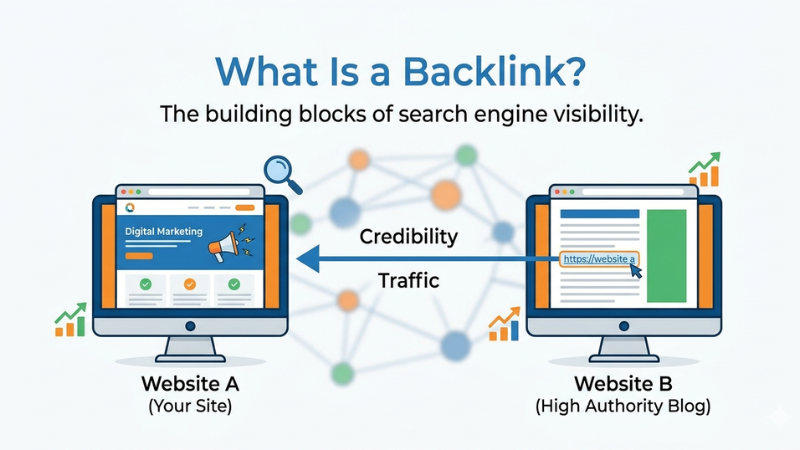
Backlinks are one of the most important parts of SEO and can have a big impact on how a website ranks on Google. A backlink is simply a link from one website to another website. Search engines see these links as signals of trust and authority, which is why websites with strong backlinks often rank higher in search results.
Backlinks can also help increase website traffic, improve online visibility, and build credibility. When a trusted website links to your content, it tells search engines that your website may provide useful and valuable information to users.
However, not all backlinks are good for SEO, so it’s important to understand how they work and which types of backlinks actually help rankings. In this beginner-friendly guide, you’ll learn what backlinks are, why they matter, different types of backlinks, and how to build high-quality backlinks safely for long-term SEO success.
How Do Backlinks Work?
Backlinks work as signals that help search engines understand how trustworthy and relevant a website is. When one website links to another, search engines like Google review that link to decide how much value it should pass to the linked page.
Google evaluates backlinks based on several factors. It looks at the authority of the linking website, the relevance of the content, and how naturally the link is placed within the page. A link from a trusted and relevant website is usually more valuable than a random or unrelated one.
Not all backlinks carry the same weight. Some links have more impact because they come from high-quality and authoritative sources, while others may have very little effect.
This is where the concept of link equity, also known as “link juice,” comes in. It refers to the value or authority passed from one page to another through a backlink, helping improve rankings and visibility in search results.
Why Are Backlinks Important for SEO?
Backlinks are one of the most important ranking factors in SEO because they help search engines understand the value, trust, and relevance of a website. Websites with quality backlinks often perform better in search results and attract more organic traffic over time.
Help Improve Search Engine Rankings
Search engines like Google use backlinks as signals to measure the credibility of a webpage. When trusted websites link to your content, it increases the chances of ranking higher for relevant keywords. Strong backlinks can improve your visibility in search engine results and help your pages compete more effectively.
Build Website Authority
Backlinks help build your website’s authority and trustworthiness. When authoritative websites link to your pages, search engines often consider your content more reliable and valuable within your industry.
Increase Organic Traffic
Higher rankings usually lead to more organic traffic. Backlinks can also bring direct referral visitors from other websites, helping you reach a larger audience online.
Help Search Engines Discover Pages
Search engines use links to crawl and index webpages. Backlinks help search engines discover new pages on your website more efficiently.
Improve Brand Visibility and Trust
Getting backlinks from reputable websites can increase your online visibility and improve brand credibility. Users are more likely to trust websites that are mentioned or linked by trusted sources.
Types of Backlinks
Backlinks come in different types, and each type plays a different role in SEO. Understanding these types helps you build a natural and balanced backlink profile.
Dofollow Backlinks
Dofollow backlinks are the most valuable type of backlinks for SEO. These links pass authority from one website to another, which helps improve search rankings. When a high-quality website gives you a dofollow link, it can positively impact your website’s visibility in search results.
Nofollow Backlinks
Nofollow backlinks do not pass SEO authority directly, but they are still useful. These links tell search engines not to transfer ranking value. However, they can still bring traffic, increase visibility, and help create a natural backlink profile, which is important for long-term SEO.
Sponsored Backlinks
Sponsored backlinks are links that are paid or part of a promotional agreement. These links are usually marked with a “sponsored” tag to let search engines know they are not natural editorial links. They are mainly used for advertising or brand promotion.
UGC (User-Generated Content) Links
UGC links come from user-generated content such as forum posts, comments, or community discussions. These links help show natural engagement and can contribute to brand awareness and traffic, even if they have limited SEO value.
What Makes a High-Quality Backlink?
Not all backlinks are equal. Some backlinks can strongly improve your SEO, while others may have little or no value. A high-quality backlink comes from a trusted, relevant, and well-placed source.
Relevance
A good backlink comes from a website that is related to your niche or industry. Relevant links are more useful because they match your content topic and audience interest.
Website Authority
Backlinks from authoritative and trusted websites carry more SEO value. Search engines consider these websites more reliable, so their links have a stronger impact on rankings.
Contextual Placement
Links placed naturally within the main content of a page are more valuable than links placed in footers, sidebars, or unrelated sections. Contextual links feel more natural and useful.
Natural Anchor Text
Anchor text should look natural and not over-optimized. It should clearly describe the linked content without forcing keywords.
Real Website Traffic
Backlinks from websites that receive real visitors are more powerful because they can bring referral traffic and indicate genuine popularity.
Good Backlinks vs Bad Backlinks
Understanding the difference between good and bad backlinks is very important for building a strong SEO strategy. The quality of your backlinks directly affects your website’s ranking and long-term performance.
What Are Good Backlinks?
Good backlinks come from trusted, relevant, and high-authority websites. These links are placed naturally within useful content and are related to your niche. They help improve rankings, increase website authority, and bring real traffic to your site.
What Are Bad Backlinks?
Bad backlinks come from low-quality, spammy, or unrelated websites. These links are often created in bulk, have no real value, and are not relevant to your content. They do not help SEO and can sometimes create risks for your website.
Can Bad Backlinks Hurt SEO?
Yes, bad backlinks can negatively impact your SEO if your website has too many of them. Search engines may see your site as untrustworthy, which can lead to lower rankings or reduced visibility in search results.
How Google Handles Spammy Links
Google is smart at detecting spammy backlinks. In most cases, it ignores low-quality links, but in severe situations, it may reduce rankings or apply penalties. That is why focusing on quality backlinks is always safer for long-term SEO success.
How to Get Backlinks for Your Website
There are many effective ways to build high-quality backlinks for your website. The key is to focus on safe and ethical strategies that bring long-term SEO benefits.
Guest Posting
Guest posting means writing articles for other websites in your niche and adding a link back to your website. It helps you build authority, gain exposure, and earn relevant backlinks.
Niche Edits
Niche edits involve adding your link to an existing article on another website. Since the page is already indexed and has authority, this method can provide faster SEO benefits when done on relevant sites.
Resource Page Link Building
Many websites have resource pages that list helpful tools and guides. You can reach out to these sites and suggest adding your content if it provides value to their audience.
Broken Link Building
This strategy involves finding broken links on websites and offering your content as a replacement. It helps website owners fix errors while giving you a backlink opportunity.
Digital PR and HARO
Digital PR and HARO (Help a Reporter Out) help you get featured on news websites and blogs. By sharing expert insights, you can earn high-authority backlinks and improve brand visibility.
Common Backlink Mistakes Beginners Should Avoid
Backlink building can improve SEO a lot, but only when it is done correctly. Many beginners make mistakes that can harm their website instead of helping it.
Buying Spammy Backlinks
Buying cheap or spammy backlinks from low-quality websites is risky. These links usually have no real value and can lead to poor SEO performance or even penalties.
Over-Optimizing Anchor Text
Using the same keyword-rich anchor text again and again looks unnatural. It is better to keep anchor text varied and natural to avoid appearing manipulative to search engines.
Focusing Only on Quantity
Getting a large number of backlinks is not always helpful. A few high-quality backlinks are much more powerful than hundreds of low-quality ones.
Getting Links from Irrelevant Websites
Backlinks should come from websites related to your niche. Irrelevant links do not add much SEO value and may look unnatural to search engines.
Building Links Too Quickly
Creating too many backlinks in a short time can look suspicious. A natural and steady link-building pace is safer and more effective for long-term SEO growth.
Best Practices for Building Backlinks Safely
Building backlinks the right way is important for long-term SEO success. When you follow safe practices, you can improve rankings without risking penalties or damage to your website.
Focus on Quality Over Quantity
Always prioritize high-quality backlinks instead of collecting a large number of low-value links. A few strong backlinks from trusted websites can deliver better SEO results than many weak ones.
Build Links Naturally
Backlinks should grow in a natural way over time. Avoid aggressive or spammy techniques. A steady and organic link-building process is safer and more effective for search engines.
Create Helpful Content
High-quality and useful content naturally attracts backlinks. When your content solves problems or provides value, other websites are more likely to reference and link to it.
Diversify Your Backlink Profile
A healthy backlink profile includes different types of links from various sources. This helps make your website look more natural and trustworthy in the eyes of search engines.
Monitor Your Backlinks Regularly
Keep track of your backlinks using SEO tools. Monitoring helps you identify good links, remove harmful ones, and understand what is working in your strategy.
Final Thoughts
Backlinks are one of the most important parts of SEO and play a key role in improving website rankings, authority, and visibility. They help search engines understand which websites are trustworthy and valuable, making them essential for long-term growth.
However, success in link building depends on using ethical SEO practices. Focusing on quality backlinks instead of shortcuts ensures your website stays safe from penalties and builds strong authority over time.
High-quality backlinks provide long-term value by continuously supporting your rankings and driving organic traffic. They are not just quick wins but a long-term investment in your website’s growth.
For beginners, the best approach is to stay consistent, focus on helpful content, and build backlinks naturally. With patience and the right strategy, link building can become one of the most powerful ways to grow your online presence.
Frequently Asked Questions
How Many Backlinks Does a Website Need?
There is no fixed number of backlinks needed for a website. It depends on quality, not quantity. Results vary based on competition, niche, and authority. Consistent, high-quality backlink building is more important than building links in bulk.
How Long Does It Take for Backlinks to Work?
Backlinks usually take time to show results. Depending on website authority, competition, and link quality, it may take a few weeks to a few months. Consistent SEO efforts help speed up ranking improvements and organic visibility.
Are Backlinks Still Important for SEO?
Yes, backlinks are still important for SEO because they help build trust and authority. Google now focuses more on quality and relevance. Modern link building emphasizes natural, high-quality backlinks instead of spammy or low-value link building practices.
What is the difference between backlinks and link building?
Backlinks are links from other websites pointing to your website. Link building is the process of acquiring those backlinks. In simple terms, backlinks are the result, while link building is the strategy used to get those links.
How can I check my website backlinks?
You can check your website backlinks using SEO tools like Google Search Console, Ahrefs, SEMrush, or Moz. These tools show which websites are linking to your pages, along with details like quality, anchor text, and referring domains.